

A Simple Dietary Supplement Could Make the Difference Between Life and Death During Illness
A simple dietary amino acid may play a surprising role in controlling inflammation.
The moment the body is injured or infected—whether from touching a hot pan or catching the flu—a complex biological process begins. Symptoms appear and change over time as the body attempts to recover. Scientists refer to this progression as a disease trajectory, which describes the path a person follows after illness or injury. That path can lead to recovery or, in severe cases, death. Each person’s trajectory differs depending on factors such as medical history, sex, age, and many other biological influences.
Salk Institute scientist Janelle Ayres, PhD, has spent many years studying how the body guides this process. Her work focuses on understanding why some individuals become seriously ill while others recover with little difficulty. She is also exploring ways to redirect disease trajectories so that more patients move toward survival and recovery rather than severe illness.
Across many types of infections and injuries, inflammation often determines whether a person’s condition worsens. Inflammation plays an essential role in protecting the body. It signals that something is wrong and draws immune cells to the affected area. However, excessive inflammation can damage tissues and organs and may ultimately become life-threatening.
For this reason, inflammation acts as both a defense mechanism and a potential source of harm. When carefully controlled, it helps eliminate threats. When it becomes excessive, it can contribute to serious complications.
Because infections frequently trigger strong inflammatory responses, researchers at the Salk Institute investigated whether diet could influence inflammation driven by infection. Using a mouse model, they found that adding the amino acid methionine to the animals’ diet protected infected mice from several severe complications. These included inflammation-related wasting, disruption of the blood-brain barrier, and death.
The protective effect occurred because methionine improved kidney filtration. This discovery highlights an important but often overlooked role of the kidneys in helping the body recover from infection.
The study appeared in Cell Metabolism. The results show how relatively small dietary adjustments could influence the course of disease. According to the researchers, methionine supplementation might one day help treat inflammatory conditions. It could also prove useful for patients with kidney disease or kidney failure and for people receiving dialysis.
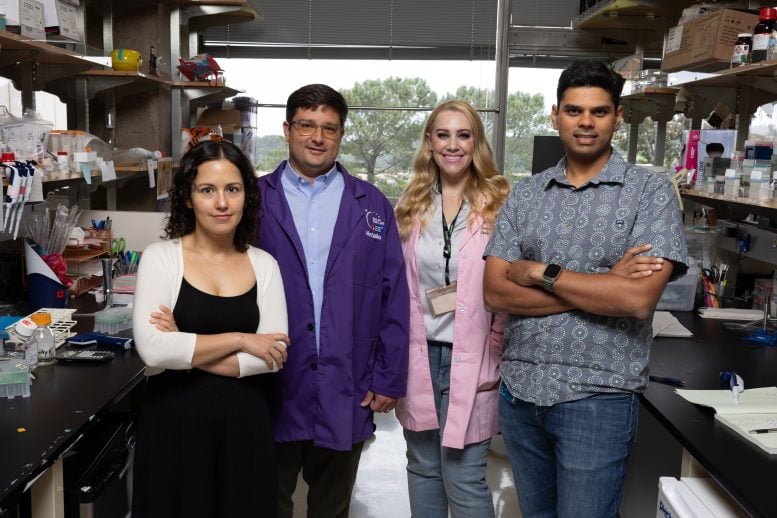
“Our study indicates that small biological differences, including dietary factors, can have large effects on disease outcomes,” says senior author Ayres, professor and holder of the Salk Institute Legacy Chair at Salk, as well as a Hughes Medical Institute Investigator. “Our discovery of a kidney-driven mechanism that limits inflammation, together with the protective effects of methionine supplementation in mice, points toward the potential of nutrition as a mechanistically informed medical intervention that can direct and optimize the paths people take in response to insults that cause disease.”
What is inflammation?
Inflammation is the body’s natural response to harmful intruders. These threats may include disease-causing microbes or physical injuries such as splinters. When the immune system detects a problem, immune cells quickly move to the affected location to begin the healing process.
During this response, immune cells release signaling proteins known as pro-inflammatory cytokines. These molecules act like chemical alarms that alert and coordinate other immune cells, strengthening the body’s defense against the threat.
Keeping inflammation at the right level is challenging. Too little inflammation allows infections to spread, while too much can damage healthy tissues. Much of the previous research has focused on how the immune system turns inflammation on and off.
Ayres’s team is studying a different aspect of this process. Instead of looking only at simple on and off switches, they are examining how the body fine-tunes inflammation by adjusting cytokine levels.
“Pro-inflammatory cytokines are ultimately what leads to sickness and death in a lot of cases,” says first author Katia Troha, PhD, a postdoctoral researcher in Ayres’s lab. “The immune system has to balance inflammation to attack the invader without harming healthy cells in the body. Our job is to find the mechanisms it uses to do that, so that we can target them to improve patient outcomes.”
How can kidney function help reduce inflammation?
To investigate how cytokine levels are regulated, the researchers used a mouse model of widespread inflammation triggered by the bacterium Yersinia pseudotuberculosis. One of the earliest changes they observed was that infected mice ate less food. This behavior suggested that infection was altering the animals’ metabolism.
The scientists then measured circulating amino acids, which are the building blocks of proteins that support many cellular functions. These measurements revealed that infected mice had lower levels of methionine, an essential amino acid obtained through food.
Infected mice showed depressed methionine levels—an essential amino acid found in our everyday diets. Curious, Troha decided to feed a new batch of mice with methionine-supplemented chow, and surprisingly, these mice were protected against the infection.
Additional experiments revealed how the amino acid produced this effect. Methionine worked together with the kidneys to lower cytokine levels in the bloodstream. It increased the kidneys’ filtration ability, improved blood flow, and allowed excess pro-inflammatory cytokines to be removed from the body through urine.
Importantly, this process reduced harmful inflammation without weakening the immune system’s ability to fight the infection.
Curious whether methionine’s effect was present in other conditions, the researchers also looked at sepsis and kidney injury models. They found that methionine was also protective for these mice, supporting that methionine may be a useful tool in other inflammatory disease settings.
Can dietary changes boost kidney performance?
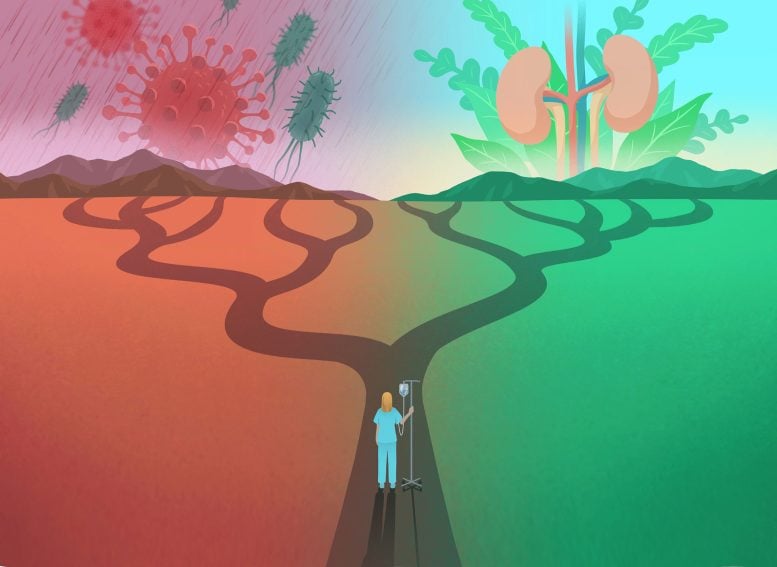
By supplementing their diets with methionine, Salk scientists were able to give infected mice entirely different disease trajectories. The amino acid boosted the animals’ kidney function and protected them against wasting, blood-brain barrier dysfunction, and death without hindering their bodies’ ability to fight and kill Yersinia pseudotuberculosis.
And the sepsis and kidney injury models show these effects extend to other infections and inflammatory conditions, too, making methionine a potentially useful tool for the treatment of infectious diseases, particularly in cases of kidney disease or failure, or for patients undergoing dialysis.
“Our findings add to a growing body of evidence that common dietary elements can be used as medicine,” says Ayres. “By studying these basic protective mechanisms, we reveal surprising new ways to shift individuals that are fated to develop disease and die onto trajectories of health and survival. It may one day be possible for something as simple as a supplement with dinner to make the difference between life and death for a patient.”
While the results are promising, the researchers note that efficacy in humans is yet to be tested—nobody should be rushing out for methionine supplements quite yet. Follow-up studies will explore the mechanisms by which methionine acts, whether other amino acids have similar or complementary effects, and how this may all translate to humans.
Reference: “Dietary methionine mitigates immune-mediated damage by enhancing renal clearance of cytokines” by Katia Troha, Shrikaar Kambhampati, Arianna Insenga, Christian M. Metallo and Janelle S. Ayres, 22 January 2026, Cell Metabolism.
DOI: 10.1016/j.cmet.2025.12.011
The work was supported internally by two Salk Women & Science Special Awards and a Collaboration Grant, also a Salk Innovator Award, Howard Hughes Medical Institute, Pioneer Fund Postdoctoral Scholar Fellowship, as well as by the National Institutes of Health (AI144249, AI14929), Keck Foundation, NOMIS Foundation, and Lowry Medical Research Institute.
Never miss a breakthrough: Join the SciTechDaily newsletter.
Follow us on Google and Google News.
Source link
